


Solubility is a crucial property when it comes to cow bone empty capsules, as it directly impacts their performance in various applications. As a dedicated supplier of Cow Bone Empty Capsules, I have delved deep into understanding how these capsules interact with different solvents. This exploration is not only essential for ensuring the quality of our products but also for meeting the diverse needs of our customers in the pharmaceutical, nutraceutical, and other related industries.
Solubility Basics
Before we dive into the solubility of cow bone empty capsules in different solvents, let's briefly review what solubility means. Solubility refers to the maximum amount of a solute that can dissolve in a given amount of solvent at a specific temperature and pressure. For cow bone empty capsules, which are primarily made of gelatin derived from cow bones, the solubility is influenced by factors such as the chemical composition of the gelatin, the pH of the solvent, temperature, and the presence of other substances.

Solubility in Aqueous Solutions
Aqueous solutions are among the most common solvents used in the pharmaceutical and nutraceutical industries. The solubility of cow bone empty capsules in water is an important consideration, especially when formulating oral medications or supplements.

In pure water at room temperature, cow bone gelatin capsules typically have a limited solubility. Gelatin is a protein, and its solubility in water is affected by its molecular structure and the hydrogen bonding between its molecules. At lower temperatures, the gelatin molecules are more tightly packed, and the solubility is relatively low. However, as the temperature increases, the kinetic energy of the molecules increases, breaking the intermolecular bonds and allowing more gelatin to dissolve.
The pH of the aqueous solution also plays a significant role. In acidic solutions (pH < 7), the gelatin molecules tend to become more positively charged, which can increase their solubility. On the other hand, in basic solutions (pH > 7), the gelatin molecules become more negatively charged, and the solubility may decrease. For example, in a weakly acidic solution with a pH of around 4 - 5, the cow bone empty capsules may dissolve more readily compared to a neutral or basic solution.
Solubility in Organic Solvents
Organic solvents have different chemical properties compared to water, and their interaction with cow bone empty capsules can vary widely.
Ethanol
Ethanol is a commonly used organic solvent in the pharmaceutical industry. Cow bone empty capsules have relatively low solubility in ethanol. Ethanol is a polar solvent, but its polarity is different from that of water. The gelatin in the capsules is not very soluble in ethanol because the ethanol molecules do not interact strongly enough with the gelatin molecules to break the intermolecular forces holding the gelatin together. However, in some cases, a small amount of gelatin may dissolve in a mixture of ethanol and water, especially when the ethanol concentration is relatively low.
Acetone
Acetone is a non - polar organic solvent. Cow bone empty capsules have extremely low solubility in acetone. The non - polar nature of acetone means that it cannot interact effectively with the polar gelatin molecules. The intermolecular forces in gelatin, such as hydrogen bonds and dipole - dipole interactions, are not easily disrupted by acetone molecules. As a result, the capsules remain largely intact when placed in acetone.
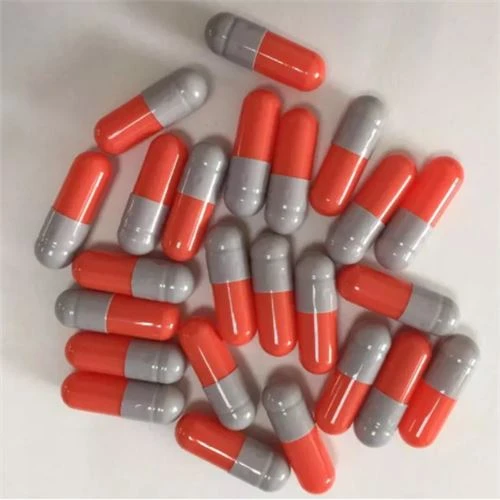
Solubility in Simulated Physiological Fluids
Understanding the solubility of cow bone empty capsules in simulated physiological fluids is of great importance, as it helps predict how the capsules will behave in the human body.
Simulated Gastric Fluid (SGF)
Simulated gastric fluid is acidic, with a pH similar to that of the human stomach (around pH 1.2 - 2.0). In SGF, cow bone empty capsules dissolve relatively quickly. The acidic environment protonates the amino groups in the gelatin molecules, increasing their solubility. The enzymes present in the stomach, such as pepsin, can also break down the gelatin further, facilitating the dissolution of the capsules. This rapid dissolution is desirable for many oral medications, as it allows for the quick release of the active ingredients in the stomach.
Simulated Intestinal Fluid (SIF)
Simulated intestinal fluid is slightly basic, with a pH of around 6.8 - 7.5. The solubility of cow bone empty capsules in SIF is different from that in SGF. The basic environment deprotonates the carboxyl groups in the gelatin molecules, which can affect the solubility. Some types of cow bone empty capsules, such as Intestines - dissolved Capsule, are designed to be more soluble in the intestinal environment. These capsules are often coated or modified to resist dissolution in the stomach and dissolve slowly in the intestines, allowing for targeted drug delivery.
Factors Affecting Solubility
Apart from the type of solvent and its properties, several other factors can affect the solubility of cow bone empty capsules.
Capsule Size
The size of the capsule can influence its solubility. Smaller capsules, such as Size 0 Gelatin Empty Capsule, have a larger surface - area - to - volume ratio compared to larger capsules. This means that they have more contact area with the solvent, which can result in faster dissolution. However, other factors such as the thickness of the capsule wall and the composition of the gelatin can also modify the effect of size on solubility.
Gelatin Source and Quality
The source of the cow bone gelatin and its quality can have a significant impact on solubility. Gelatin obtained from different parts of the cow bones or processed using different methods may have different molecular structures and properties. High - quality gelatin with a more uniform molecular structure may dissolve more predictably and consistently compared to lower - quality gelatin.

Additives and Coating
Many cow bone empty capsules may contain additives or coatings to modify their properties. For example, some capsules may be coated with a polymer to control their dissolution rate. These additives and coatings can either increase or decrease the solubility of the capsules depending on their chemical nature and the type of solvent.
Applications and Implications
The solubility of cow bone empty capsules in different solvents has important implications for their applications.
In the pharmaceutical industry, the solubility of the capsules in simulated physiological fluids determines the release profile of the drugs. For immediate - release medications, capsules that dissolve quickly in the stomach are preferred. On the other hand, for delayed - release or targeted - release medications, capsules that dissolve slowly or specifically in the intestines are more suitable.
In the nutraceutical industry, the solubility of the capsules affects the bioavailability of the nutrients. If the capsules do not dissolve properly in the digestive tract, the nutrients may not be released effectively, reducing their absorption by the body.
Conclusion
As a supplier of Cow Bone Empty Capsules, understanding the solubility of our products in different solvents is crucial for providing high - quality capsules that meet the specific needs of our customers. Whether it's for pharmaceutical, nutraceutical, or other applications, the solubility of the capsules can be tailored by adjusting factors such as the gelatin source, capsule size, and the use of additives or coatings.
If you are interested in our Cow Bone Empty Capsules or have any questions about their solubility and performance, we invite you to contact us for procurement and further discussions. Our team of experts is ready to assist you in finding the best capsule solutions for your products.
References
- Aulton, M. E., & Taylor, P. K. (2013). Aulton's Pharmaceutics: The Design and Manufacture of Medicines. Churchill Livingstone.
- Rowe, R. C., Sheskey, P. J., & Quinn, M. E. (2018). Handbook of Pharmaceutical Excipients. Pharmaceutical Press.
- Lueßen, H. L., Merkus, F. W., & Bodde, H. E. (1997). Oral drug delivery: An overview. European Journal of Pharmaceutics and Biopharmaceutics, 44(2), 101 - 114.