


The water vapor transmission rate (WVTR) of gel hard capsule shells is a critical parameter that significantly impacts the quality, stability, and shelf - life of the encapsulated products. As a supplier of Gel Hard Capsule Shells, understanding and controlling this rate is of utmost importance for providing high - quality capsules to our customers.
What is Water Vapor Transmission Rate?
The water vapor transmission rate refers to the quantity of water vapor that passes through a material over a specific period under defined conditions of temperature and humidity. For gel hard capsule shells, it is measured in units such as grams per square meter per day (g/m²/day). This rate is influenced by several factors, including the composition of the capsule shell, its thickness, and the environmental conditions to which it is exposed.
Factors Affecting the WVTR of Gel Hard Capsule Shells
Composition of the Capsule Shell
Gel hard capsule shells are commonly made from gelatin, which can be derived from different sources such as bovine skin, porcine skin, or fish. Each source has its unique chemical and physical properties that affect the WVTR. For example, Bovine Skin Gelatin Capsule Shell has a different molecular structure compared to other gelatin types, which can lead to variations in water vapor permeability.
The addition of plasticizers, such as glycerin or sorbitol, also plays a crucial role in the WVTR. Plasticizers are added to improve the flexibility and toughness of the capsule shells. However, they can increase the water vapor transmission rate as they can create channels for water molecules to pass through the shell. The amount and type of plasticizer used need to be carefully controlled to achieve the desired balance between mechanical properties and WVTR.
Thickness of the Capsule Shell
The thickness of the gel hard capsule shell is directly related to its WVTR. Generally, a thicker shell will have a lower WVTR because it provides a greater barrier to the passage of water vapor. However, increasing the thickness too much can also affect other properties of the capsule, such as its dissolution rate and mechanical strength. Therefore, manufacturers need to optimize the shell thickness to meet the requirements of both low WVTR and other functional properties.
Environmental Conditions
Temperature and humidity are the two most important environmental factors that affect the WVTR of gel hard capsule shells. As the temperature increases, the kinetic energy of water molecules also increases, making it easier for them to penetrate the capsule shell. Similarly, higher humidity levels mean there are more water molecules in the surrounding environment, which increases the driving force for water vapor to move into the capsule.
Importance of Controlling WVTR in Gel Hard Capsule Shells
Product Stability
For many pharmaceutical and nutraceutical products, moisture can cause degradation. For example, moisture can lead to the hydrolysis of active ingredients, which can reduce their potency and effectiveness. By controlling the WVTR of the capsule shells, we can protect the encapsulated products from moisture - induced degradation, ensuring their stability over the shelf - life.
Appearance and Integrity
Excessive moisture uptake can cause the capsule shells to become soft, sticky, or deformed. This not only affects the appearance of the capsules but also their integrity. A deformed capsule may not be able to properly seal or may break during handling, leading to leakage of the encapsulated contents. Maintaining a low WVTR helps to preserve the physical appearance and integrity of the capsules.
Shelf - Life Extension
By reducing the WVTR, we can extend the shelf - life of the products. Products with a longer shelf - life are more attractive to customers as they have more time to use the product before it expires. This can also reduce waste and costs associated with product returns due to expired or degraded products.
Measuring the WVTR of Gel Hard Capsule Shells
There are several methods available for measuring the WVTR of gel hard capsule shells. One common method is the gravimetric method, which involves weighing the capsule samples before and after exposure to a controlled environment of temperature and humidity for a specific period. The difference in weight is then used to calculate the WVTR.
Another method is the use of moisture sensors. These sensors can continuously monitor the moisture content inside and outside the capsule shells, allowing for real - time measurement of the WVTR. This method is particularly useful for studying the dynamic changes in WVTR under different environmental conditions.
Our Approach as a Gel Hard Capsule Shell Supplier
As a supplier of Hard Gelatin Capsule Shell, we are committed to providing capsule shells with low and consistent WVTR. We use high - quality gelatin sources and carefully control the manufacturing process to ensure the optimal composition and thickness of the capsule shells.
We also conduct extensive quality control tests on our capsule shells to measure the WVTR. Our state - of - the - art testing facilities allow us to accurately measure the WVTR under different environmental conditions, ensuring that our products meet the strict quality standards of our customers.
In addition to standard capsule shells, we also offer Intestines - dissolved Capsule with specific WVTR requirements. These capsules are designed to dissolve in the intestines, and controlling the WVTR is crucial to ensure their proper function and stability.
Conclusion
The water vapor transmission rate of gel hard capsule shells is a complex but important parameter that affects the quality, stability, and shelf - life of encapsulated products. As a supplier, we understand the significance of controlling the WVTR and are dedicated to providing high - quality capsule shells that meet the diverse needs of our customers.
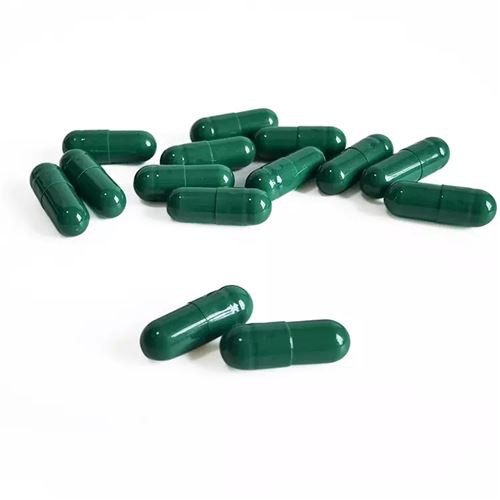

If you are interested in our Gel Hard Capsule Shells and would like to discuss your specific requirements, please feel free to contact us for procurement and further negotiation. We are looking forward to establishing a long - term partnership with you.
References
- Rhodes, C. T., & Porter, S. C. (Eds.). (2012). Pharmaceutical dosage forms: Tablets. CRC press.
- Gibson, M. S. (2001). Handbook of encapsulation and controlled release. CRC press.
- Peppas, N. A., & Bures, P., & Leobandung, W., & Ichikawa, H. (2000). Hydrogels in pharmaceutical formulations. European journal of pharmaceutics and biopharmaceutics, 50(1), 27 - 46.